How to Import Packages in Go

Go's standard library is a set of packages: fmt for printing, strings for text, time for dates and many more. A file lists the packages it uses in an import block and then calls their functions through the package name, as in strings.ToUpper.
Syntax
import (
	"<package>"
	"<other/package>"
)
| Part | What it does |
|---|---|
import ( ... ) | Lists the packages this file uses, one per line. |
"<package>" | The package's import path, such as "strings" or "encoding/json". |
<name>.<Function> | How you use it: the last part of the path, a dot and an exported name. |
The Go specification: "An import declaration states that the source file containing the declaration depends on functionality of the imported package and enables access to exported identifiers of that package."
The Example
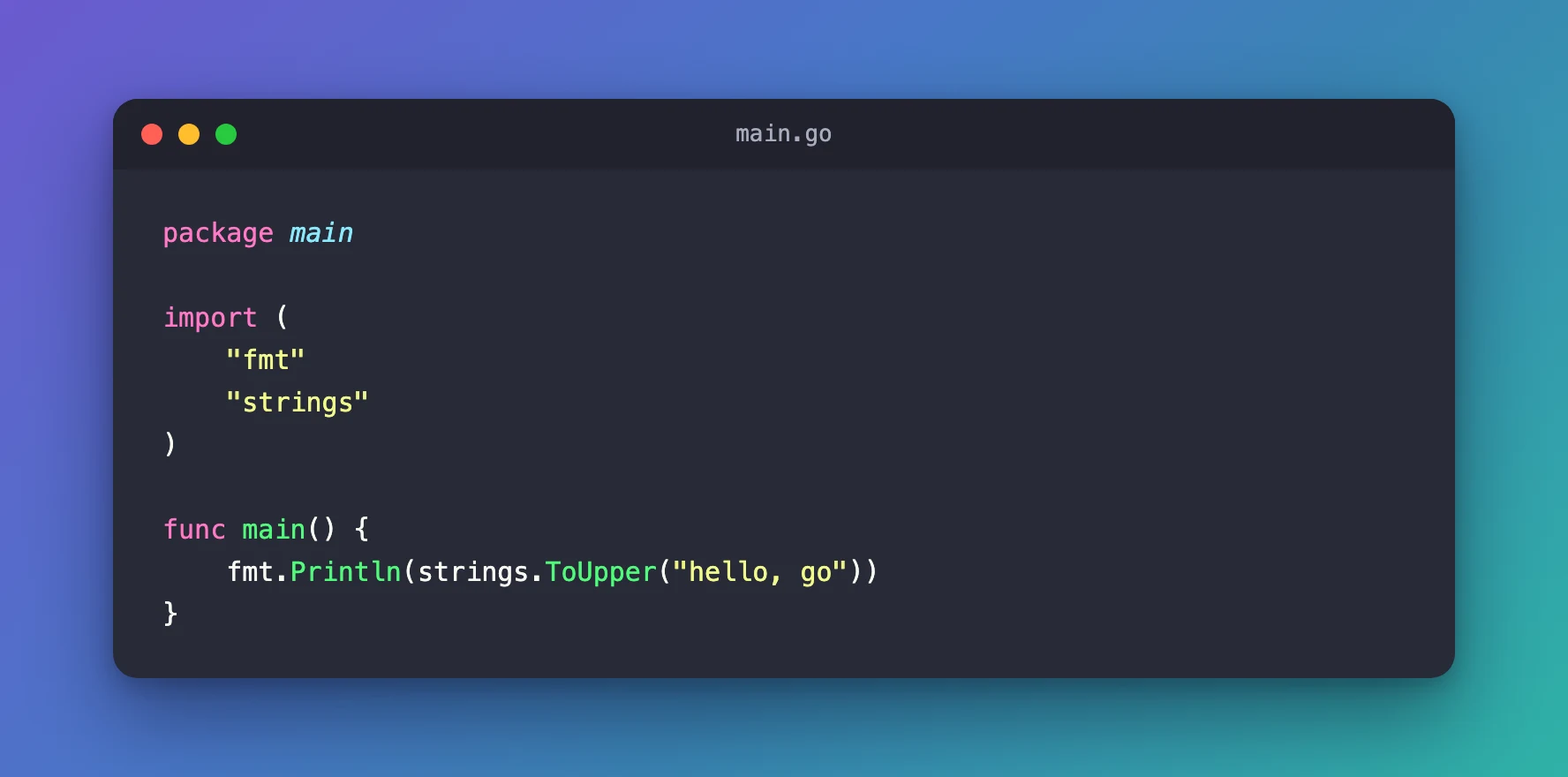
The example imports fmt and strings and prints a greeting in capitals.
Prerequisites
- Go.
go runcompiles and runs a single file. This guide uses Go 1.27.4.
Step 1: Write the Code
Create a file named main.go:
package main

import (
	"fmt"
	"strings"
)

func main() {
	fmt.Println(strings.ToUpper("hello, go"))
}
strings.ToUpper is an exported name: it starts with a capital letter, which is what makes it usable from other packages.
Step 2: Run It
go run main.go
HELLO, GO
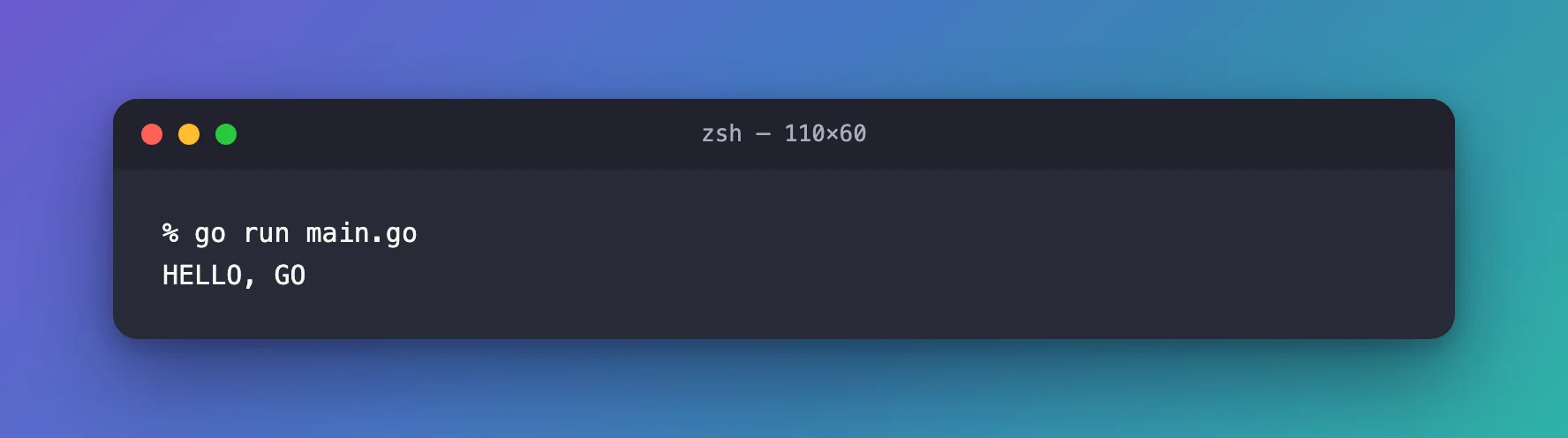
The command is the same in zsh, bash and PowerShell.
Common Mistakes
| Mistake | What happens | Do this instead |
|---|---|---|
| Importing a package and not using it | "os" imported and not used, and the program doesn't compile | Remove the import |
| Using a package without importing it | undefined: strings | Add it to the import block |
Calling a lowercase name from another package, as in strings.toUpper | undefined: strings.toUpper (but have ToUpper): only capitalized names are exported | Use the package's exported functions |
Troubleshooting
| Symptom | Likely cause | Fix |
|---|---|---|
imported and not used | An import is left over | Delete it; goimports or an editor can do this for you |
undefined: <package> | The import is missing or misspelled | Add the import with the exact path |
FAQ
Why does Go refuse unused imports?
Unused imports slow compilation and hide dead code, so Go treats them as errors rather than warnings.
Can I rename a package when importing it?
Yes: import str "strings" lets you write str.ToUpper.
Conclusion
List the packages a file needs in an import block and call their exported names as package.Name. Go accepts no unused imports, which keeps every file's dependencies honest.
Additional Resources
- Import declarations, in the Go specification.
- Standard library, the packages that come with Go.
